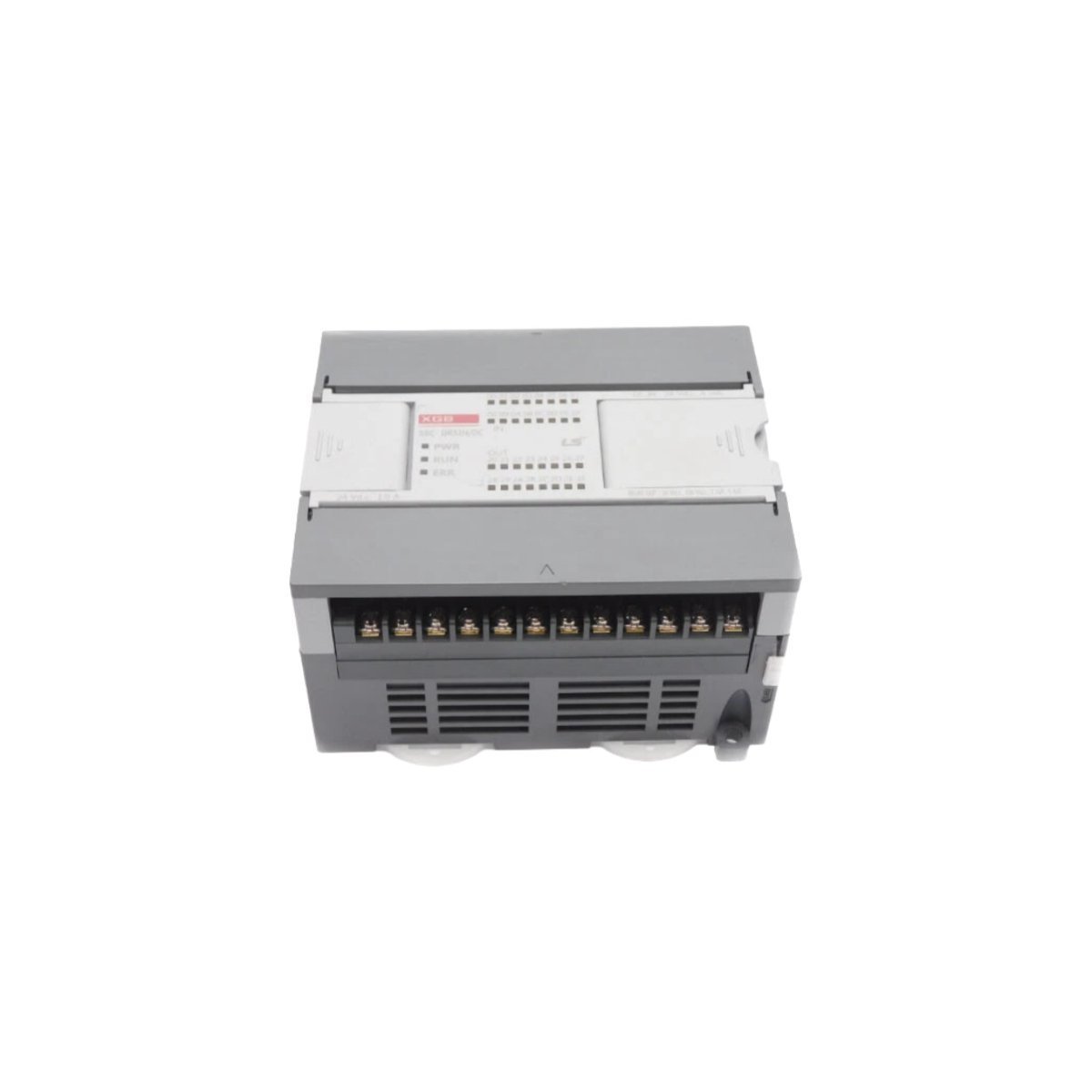
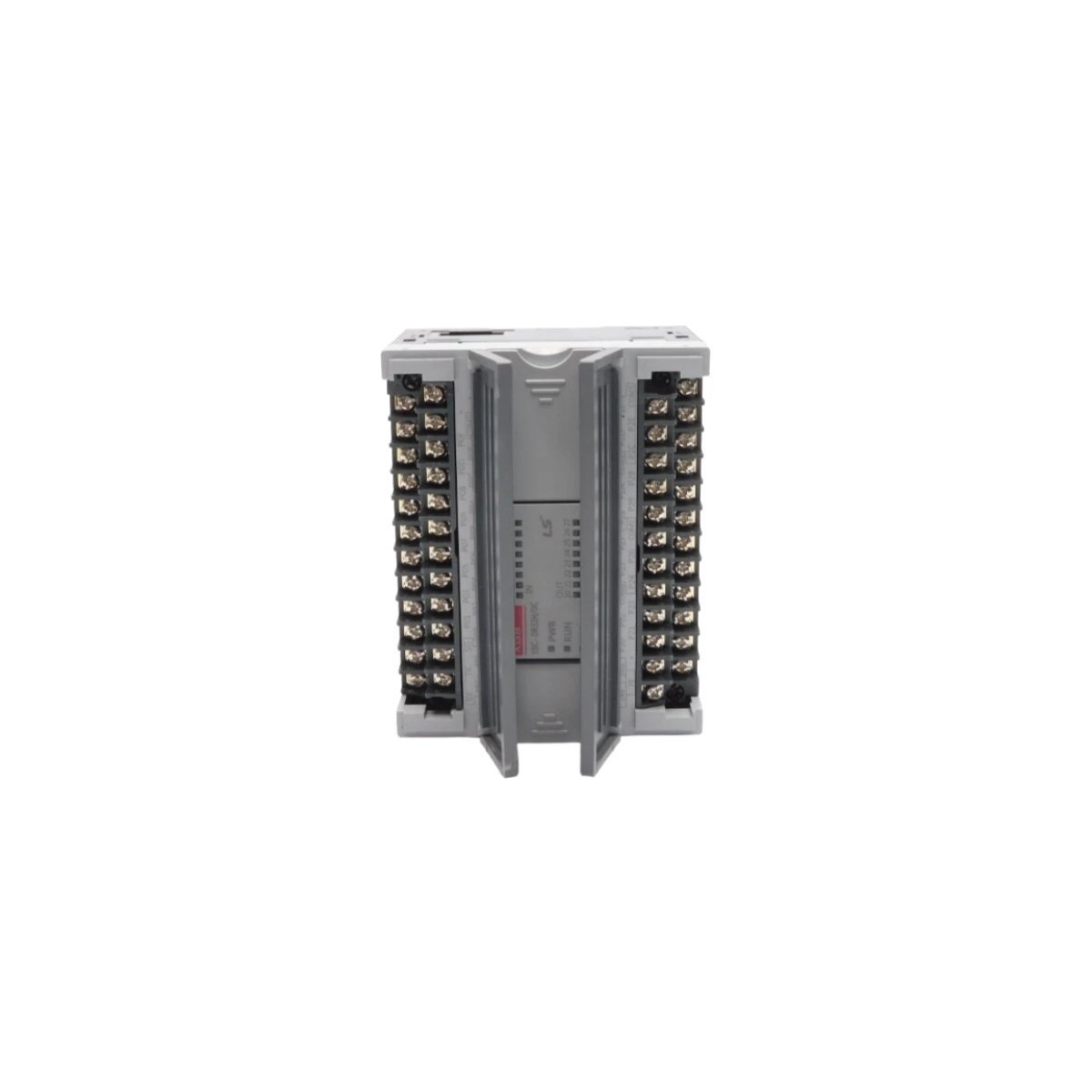
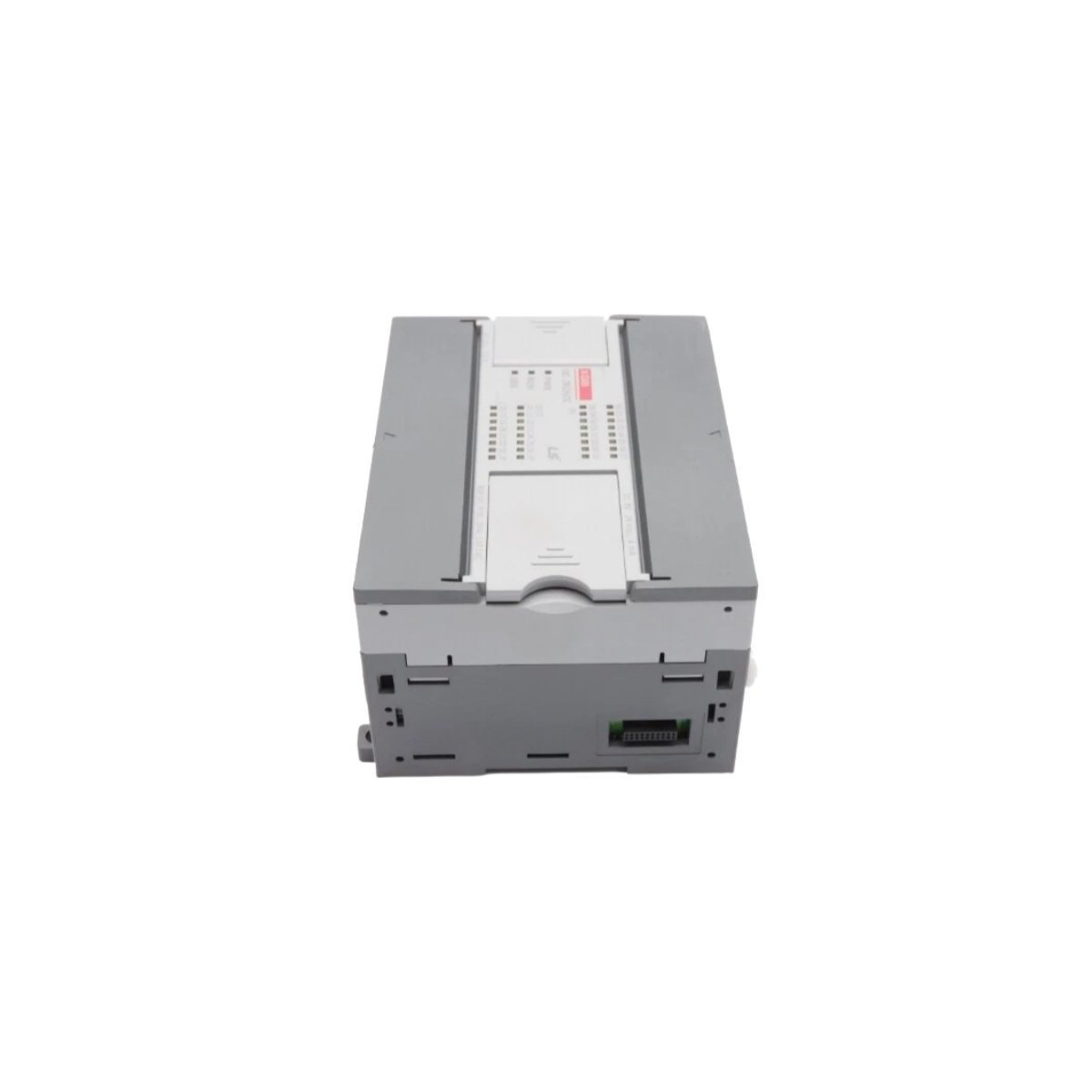
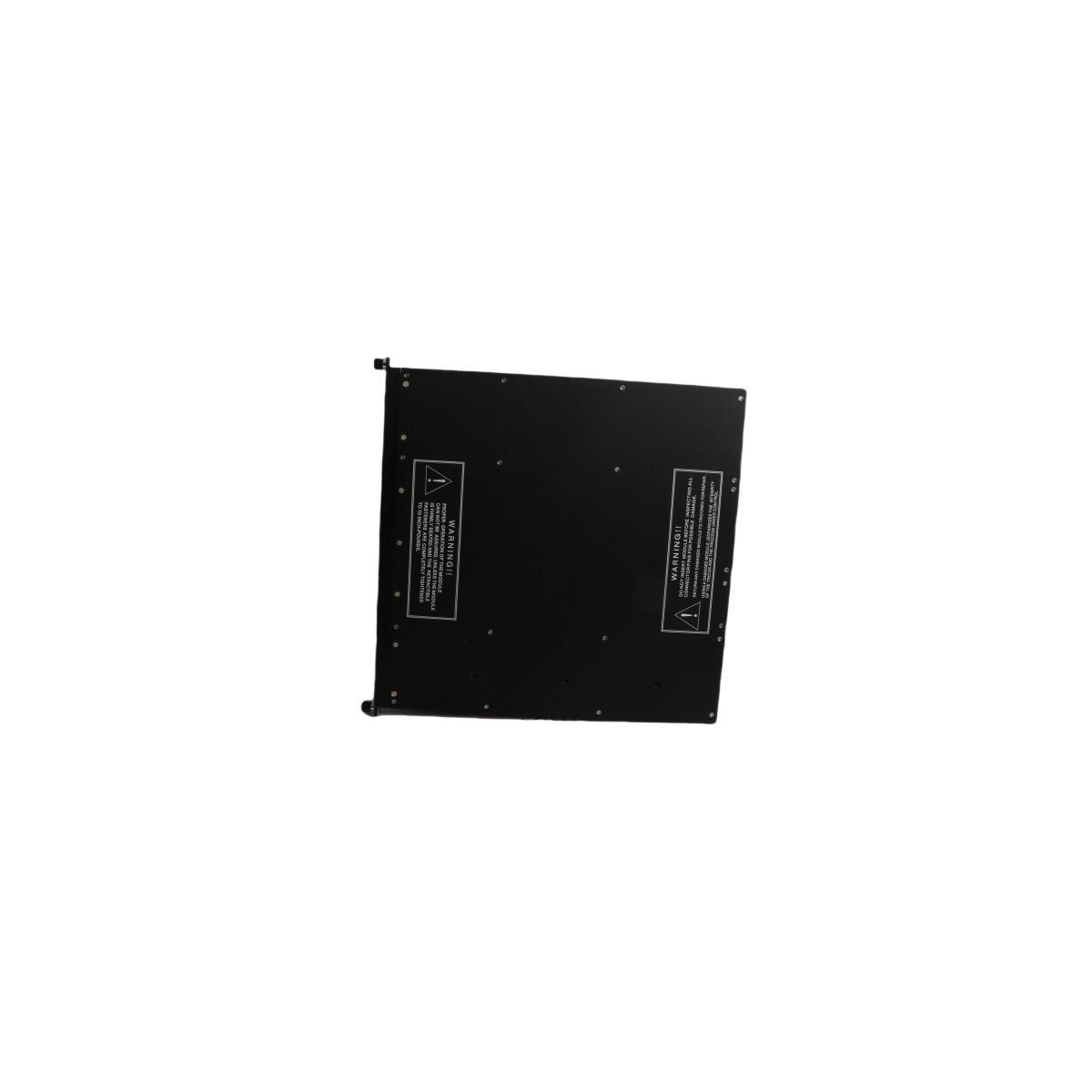
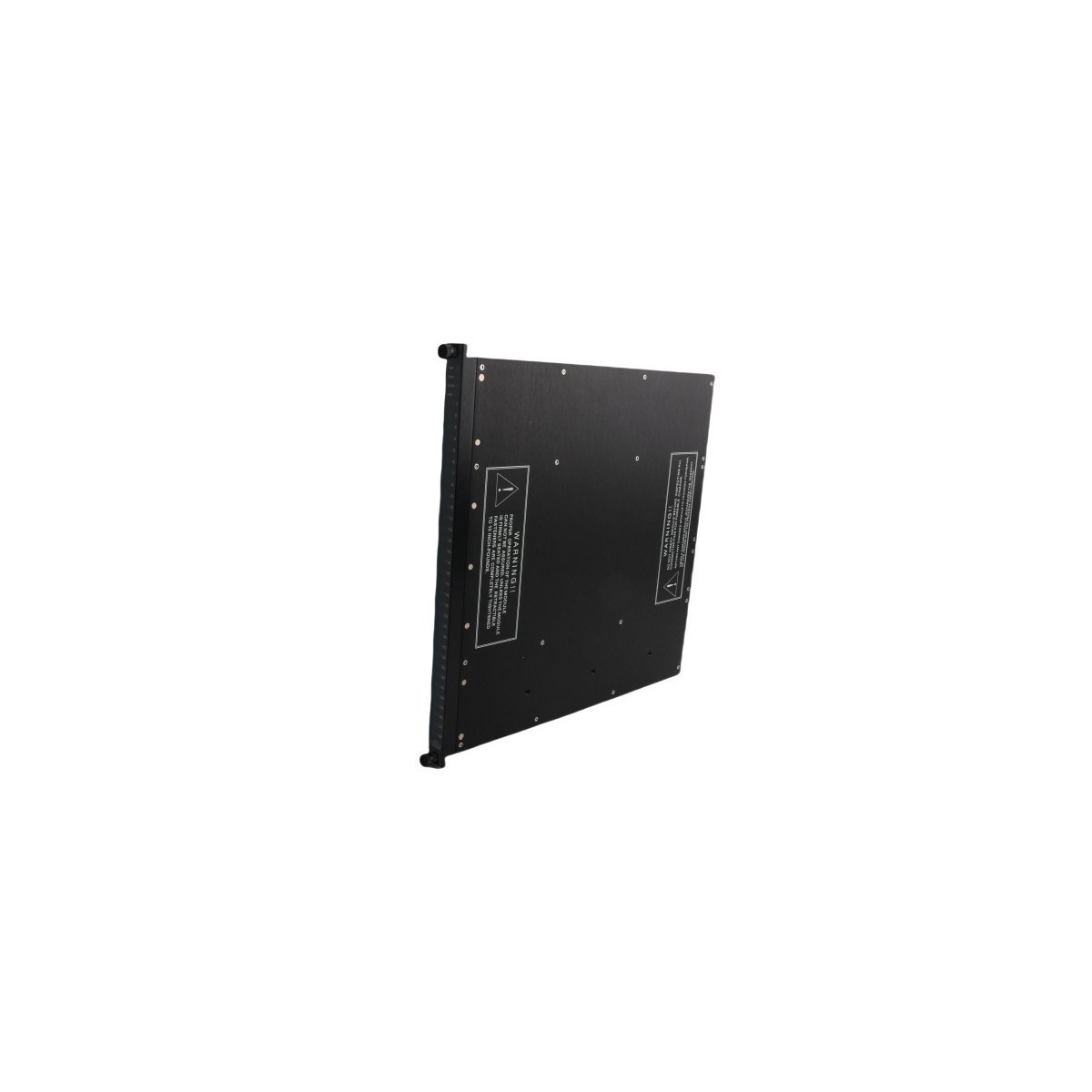
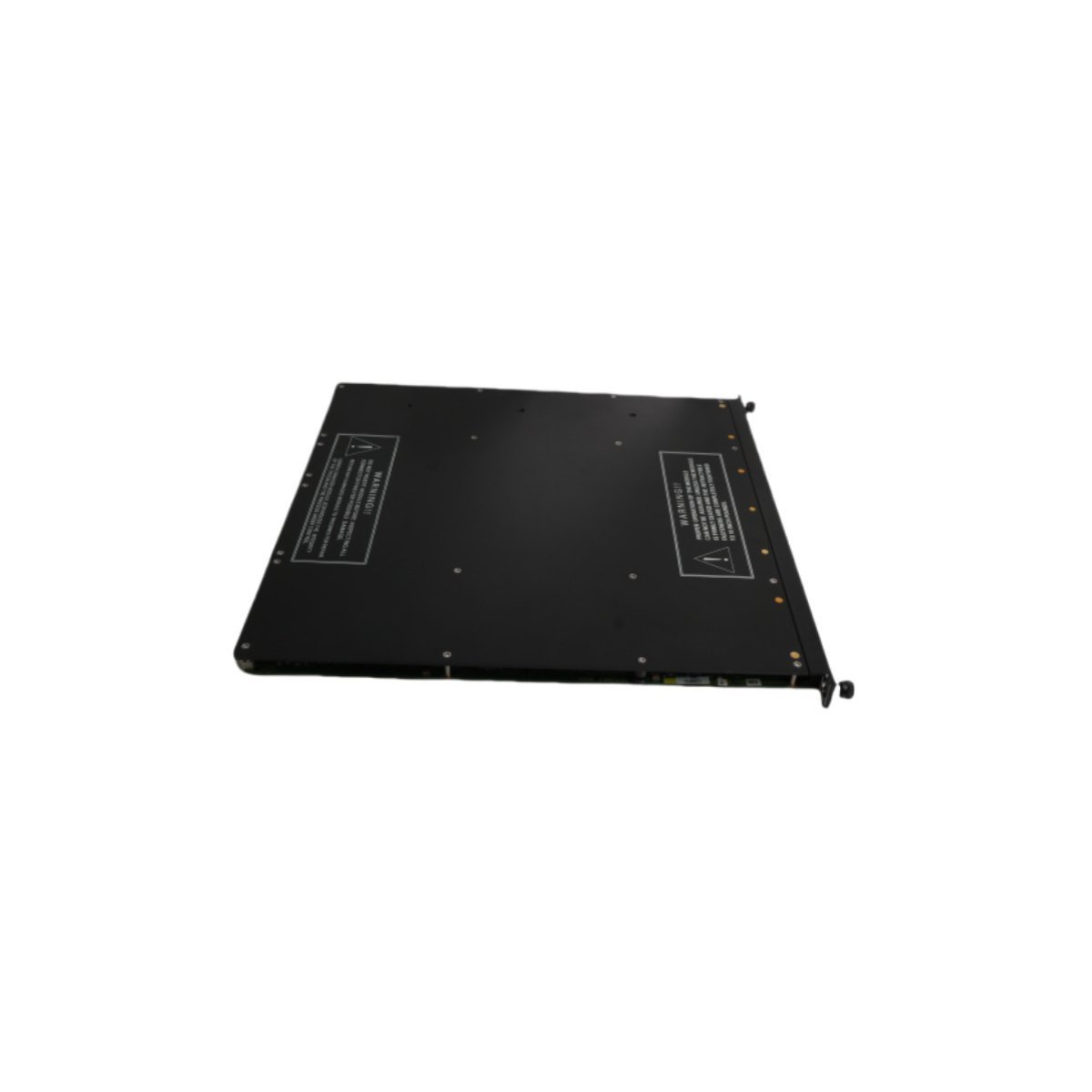
Secure the original HONEYWELL MLC-DR64H/DC MasterLogic digital output module. Provides 64 high-density points with robust relay isolation for dependable process loop control. Brand new factory surplus with certified global express logistics. Order now.
Configured for high-density digital signal switching in MasterLogic ML50 control system architectures, the HONEYWELL MLC-DR64H/DC (MLC-DR64H/DC Digital Output Module) provides direct physical/electrical execution. The module integrates 32 DC input points and 32 relay output points within a single hardware platform, providing a centralized interface for field device control. It handles continuous electrical loop connection with integrated relay isolation to isolate the internal system logic from field-side electrical disturbances.
Hardware Specifications
Parameter
Specification
Model
MLC-DR64H/DC
Brand
HONEYWELL
Origin
USA
Weight
0.4 kg
Dimensions
7 x 14 x 14.5 cm
Operating Temp
0 to 55 deg C (standard industrial rating)
Power Consumption
Nominal 24 VDC system supply
Module Type
Digital Output Module
Total I/O Points
64 points (32 DC inputs / 32 relay outputs)
Output Rated Load
24 VDC 2 A (resistive) / 220 VAC 2 A (cos phi = 1)
Max Switching Voltage
250 VAC / 125 VDC
OFF Leakage Current
0.1 mA at 220 VAC / 60 Hz
Max Switching Frequency
3,600 operations per hour
Common Terminal Capacity
5 A per common line
Minimum Control Load
5 VDC / 1 mA
HS Code
8537101190
System Compatibility
MasterLogic ML50 DCS / PLC
Process Control & Loop Insulation
The HONEYWELL MLC-DR64H/DC implements structural channel-to-channel isolation through dedicated mechanical relay interlocks, preventing high-voltage transients from crossing into the logic processing backplane. The module relies on precise physical separation of power circuits to achieve signal integrity across all 64 channels. This configuration mitigates common-mode noise interference and provides deterministic loop execution for field actuators, motor starters, and solenoid valves without requiring auxiliary external isolation barriers.
Frequently Asked Questions
Q: Can the relay outputs handle inductive loads without external suppression circuits?
A: While the relays are rated for 2 A at 220 VAC/24 VDC, inductive loads generate high back-EMF voltage spikes during turn-off. For maximum relay contact lifespan, external RC snubbers for AC loads or freewheeling diodes for DC loads must be installed across the field device.
Q: What is the limitation regarding hot-swapping the MLC-DR64H/DC module?
A: This module must not be removed or inserted while the system backplane is energized. Power to both the rack power supply and the external field-side 24 VDC/220 VAC loop must be completely isolated prior to structural extraction to prevent degradation of the backplane connectors.
Q: What causes the output execution to lag behind the CPU logic command?
A: The relay outputs possess a mechanical switching delay (typically 10 ms to 15 ms for contact engagement and release). This mechanical latency must be factored into time-critical safety loops and high-speed interlock sequences.
Field Installation Guidelines
Mounting Orientation and Clearance: Secure the module onto the standard DIN-rail assembly vertically. Maintain a minimum clearance of 50 mm above and below the module housing to allow natural convective thermal dissipation from the internal relay coils.
Field Wiring Separation: Route high-voltage AC output lines (up to 250 VAC) through separate wire ducts away from low-voltage DC input lines and communication bus cables to eliminate capacitive and inductive noise coupling.
Common Terminal Current Constraints: Ensure that the total combined current passing through any single common terminal block line does not exceed the maximum hardware rating of 5 A. Parallel multiple common lines if total load demands exceed this limit.
Wire Termination Torque: Use ferruled or solid copper conductors rated for the maximum loop voltage. Tighten terminal block screws to a torque specification of 0.5 Nm to prevent high-resistance contact points.
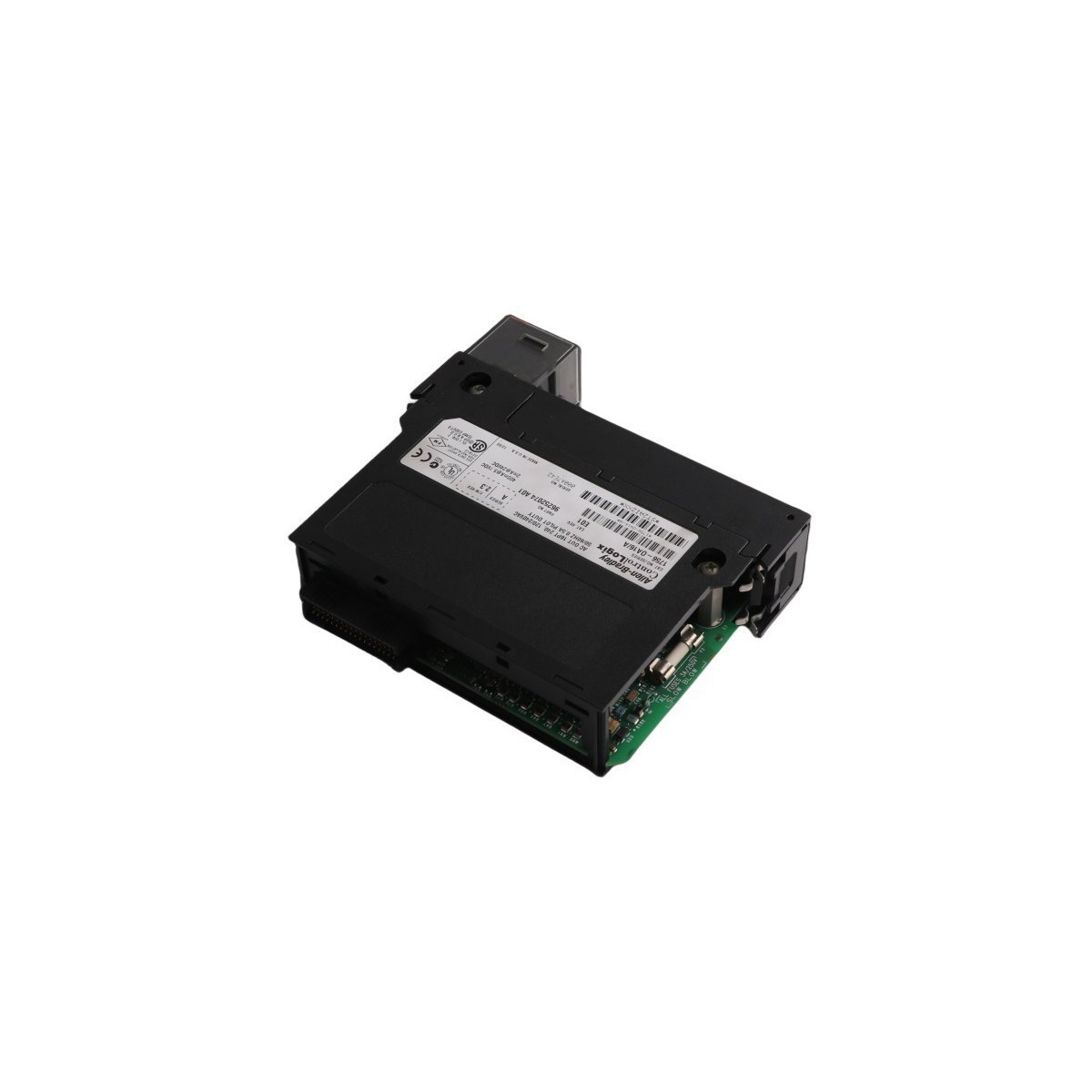
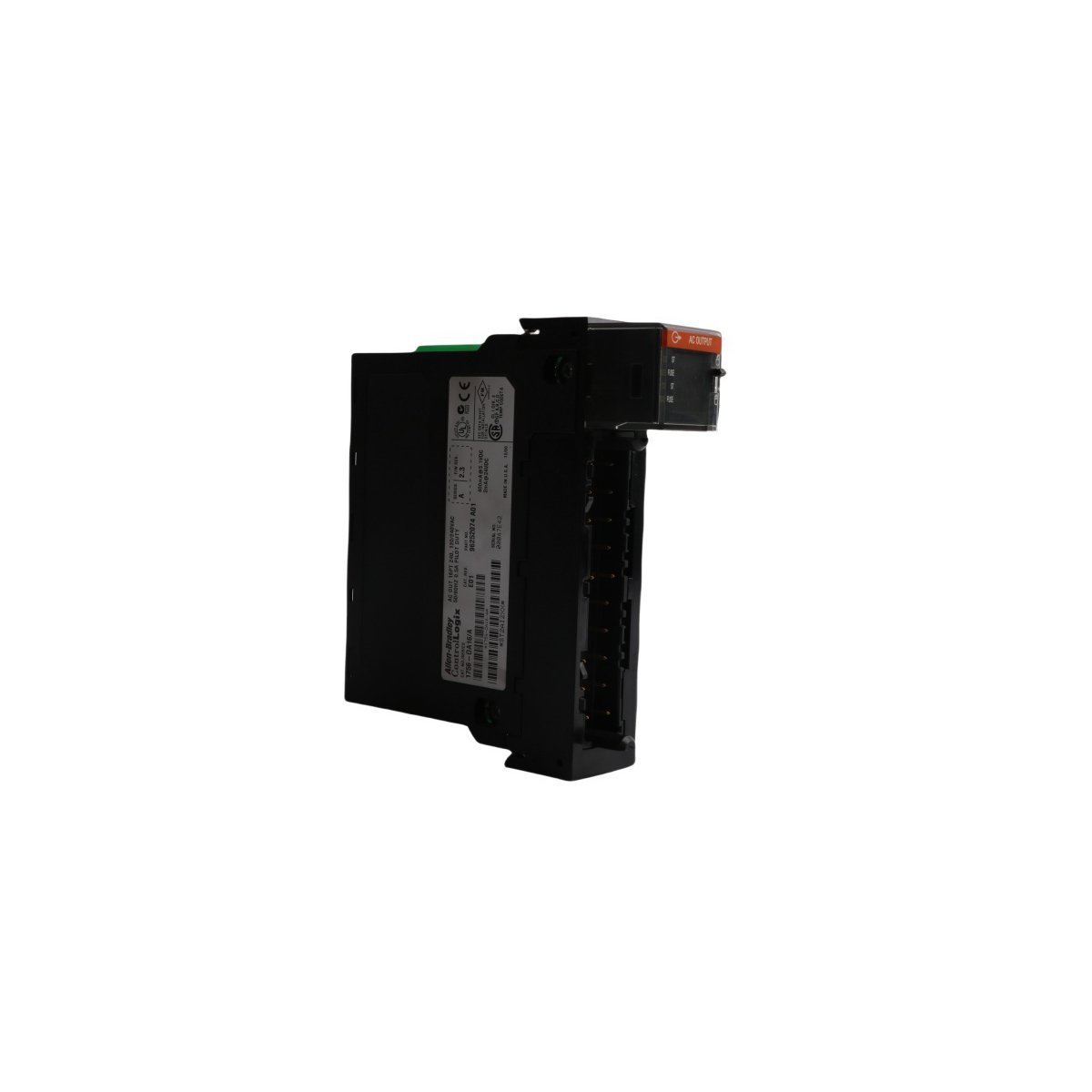
The Allen-Bradley 1756-OA16 is a 16-point discrete AC output module for ControlLogix systems. It provides reliable 74-265V AC switching with integrated diagnostics, 0.5A per point capacity, and robust thermal performance for industrial automation.
The Allen-Bradley 1715-OB8DE is a redundant 8-point digital output module featuring current-sourcing capabilities and 24V DC operation. It offers advanced diagnostics and high-availability performance for critical industrial automation and fault-tolerant control systems.
The Yokogawa ADV561-P11 S1 is a 64-channel digital output module for the CENTUM VP system. It offers high-density 24V DC control with optical isolation for process actuators. This module provides rapid response times and supports hot-swapping for continuous operation.
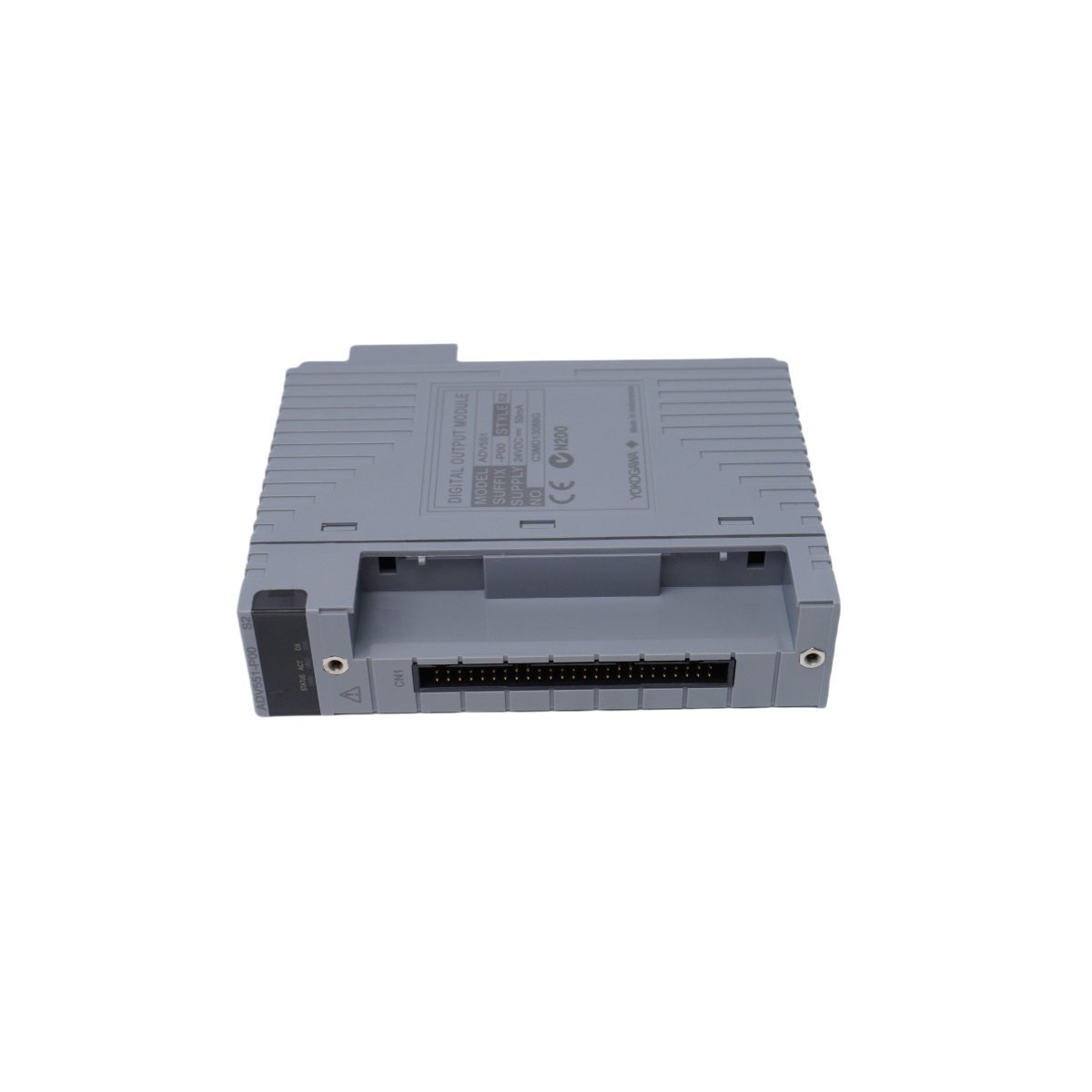
The Yokogawa ADV551-P00 S2 is a 32-channel digital output module for CENTUM VP systems.It features 24V DC isolated transistor outputs and supports PWM and pulse modes. This Japan-made module offers high-speed switching and hot-swap capabilities for reliable process control.
The Triconex 3601E is a 16-point, 115 VAC Digital Output Module designed for TMR safety systems. It features full optical isolation, SIL 3 certification, and advanced 2oo3 voting logic. This 2.04kg industrial-grade module ensures maximum safety integrity and fault-tolerant operation for critical actuators in high-voltage environments.
The Yokogawa ADV551-P60 S2 is a 32-channel isolated Digital Output module for CENTUM series DCS.Engineered for high-speed switching and industrial durability, it features integrated diagnostics and hot-swap capability to ensure maximum process uptime in safety-critical applications.
The Triconex DO 3401S2 is a 16-point TMR digital output module designed for SIL 3 safety-critical applications.Featuring independent channel isolation and a fault-tolerant redundant architecture, it provides reliable control for actuators and solenoid valves in the most demanding industrial environments
The Yokogawa NFDV561-P00 S2 is a high-density 64-channel Digital Output Module for CENTUM VP systems. Featuring a 24VDC current sink design and 100mA capacity per channel, this module offers reliable, high-precision control for valves, relays, and indicators in demanding industrial settings.
The Yokogawa ADV551-P50 S2 is a 32-channel, 24 VDC digital output module for CENTUM VP/CS 3000 FIO systems. It features 1500V isolation, 100mA per-channel current capacity, and dual-redundancy support, providing reliable and high-density executive control for industrial actuators.
The Yokogawa ADV551-P60 is a 32-channel Digital Output Module designed for CENTUM VP systems.Featuring 24 VDC output logic and support for dual-redundant configurations, it provides reliable, isolated control for solenoid valves, relays, and motor starters in safety-critical industrial environments.
The Triconex 3625N is a 16-channel, 24V DC Digital Output module featuring Triple Modular Redundancy (TMR).SIL 3 certified and hot-swappable, it provides unparalleled fault tolerance and safety-critical control for Emergency Shutdown and Fire and Gas systems.
The Triconex 3625 is a 32-point TMR digital output module for safety-critical 24 VDC applications. Featuring advanced quad-voting technology and integrated diagnostics, it ensures maximum reliability for ESD and Fire & Gas systems.
We are committed to protecting your privacy. The information collected here is strictly used to provide the requested quotes, technical support, and relevant industrial automation solutions.